


Understanding
Anxiety
Learn about anxiety, understand what you’re experiencing, and discover how therapy can help.
This page is for awareness and education only. It is not a diagnostic tool. Only a qualified mental health professional can assess and diagnose a condition.
What is Anxiety?
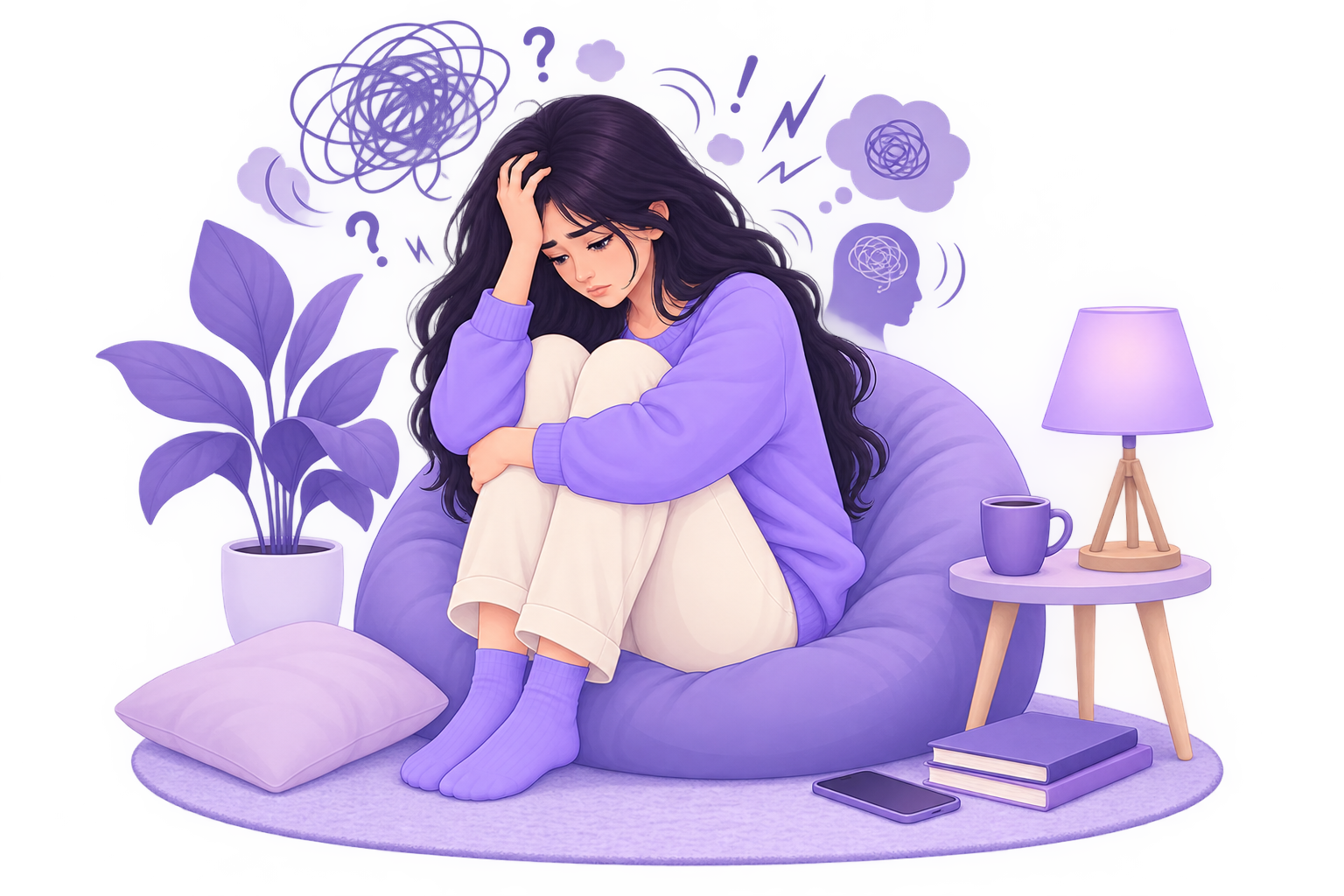
Anxiety is a natural response to stress or perceived danger everyone feels it sometimes, like before an exam, an interview, or a big decision. But for some people, anxiety becomes frequent, intense, or hard to control, and starts to affect daily life, relationships, sleep, or work.
When anxiety shows up often, feels disproportionate to the situation, or lingers even when there’s no clear reason, it may be worth understanding more and talking to someone.
What Anxiety Can Feel Like
Anxiety looks different for everyone. Some common experiences include:
A persistent sense of worry or unease, even without a specific cause
Racing thoughts or difficulty focusing on daily tasks
Restlessness or feeling constantly “on edge” and unable to relax
Physical symptoms — a racing heart, tight chest, shallow breathing, stomach discomfort
Trouble falling or staying asleep, or waking up feeling unrefreshed
Avoiding situations, people, or places out of fear, worry, or discomfort
Feeling overwhelmed by everyday decisions or simple household tasks
Difficulty focusing or concentrating on what needs to be done
Everyone experiences some of these occasionally that’s normal. It’s the frequency, intensity, and impact on your life that matter, and that’s something a professional can help you understand.
Common Types
( In Everyday Language )
- Everyday/Generalized worry: Ongoing worry about multiple areas of life (work, health, relationships) that's hard to switch off.
- Social anxiety: Intense fear of being judged or embarrassed in social situations.
- Panic experiences: Sudden, intense episodes of fear with physical symptoms like a racing heart or difficulty breathing.
- Specific fears (phobias): Strong fear reactions to particular things or situations.
( Written in plain language rather than clinical labels. full clinical categorization is something your therapist will explore with you. )
Why It Happens
Anxiety can be shaped by many factors, including:
Life stress (work, finances, relationships, major changes)
Past experiences or trauma
Family history
Physical health factors (e.g., sleep, thyroid, other conditions)
Brain chemistry and biology
Sometimes, no single clear cause at all
There’s no shame in experiencing anxiety. It’s very common and very treatable.
How Therapy Can Help
Working with a therapist can help you:
- Understand what's driving your anxiety
- Learn practical tools to calm your body and mind in the moment
- Challenge unhelpful thought patterns
- Build longer-term coping strategies suited to your life
- Feel less alone in what you're experiencing
Need someone to talk to?
Our trusted, licensed therapists are here to support you through life’s challenges.
Test 1
Clinical PsychologistWhat they mastered in
Per session price
Languages
Next available time
Test 2
Clinical PsychologistWhat they mastered in
Per session price
Languages
Next available time
Test 3
Clinical PsychologistWhat they mastered in
Per session price
Languages
Next available time
Reviewed by Dr. a, PhD, Licensed Clinical Psychologist — Last reviewed:
